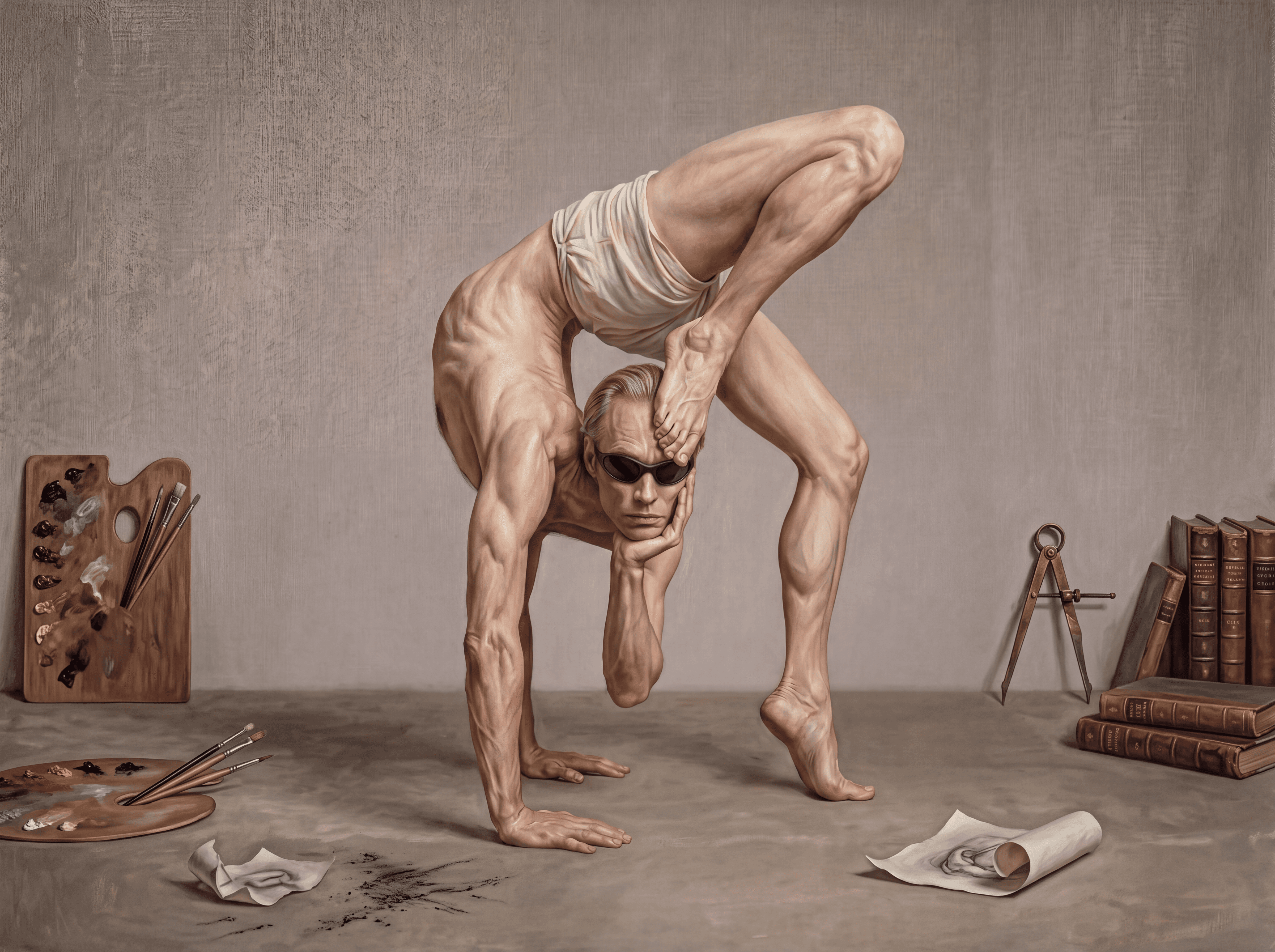
The Institute
original synthesis
BUAI IS A CULTURAL INSTITUTION EXPRESSED THROUGH CLOTHING
born under ancient influence
It begins from a single observation: identity is not given but assembled. People fashion themselves from the materials at hand — cloth, ornament, posture, language, the symbols they agree to carry. What reads as natural is almost always made. BUAI takes this as fact rather than provocation, and works from it.
The house studies how that construction happens — through dress, ritual, symbol and inheritance — and returns the study as garments and objects that can be used. Two things held together: an archive of observations, and a set of tools for self-fashioning. The research is the product; the product is the research.
This changes what a garment is. Clothing is not decoration applied to a finished person; it is one of the primary instruments by which a person is built. Across every culture, certain garments exist to do a job — to mark a threshold, to confer protection or belonging, to separate one state of life from the next. BUAI takes that function, not the belief beneath it, and translates it into clothing for now. Meaning is built into how a garment is structured and used, not printed across its surface. The house does not ask to be believed. It asks to be worn.
Everything it produces is treated as an artefact: an object that carries cultural information and can be read — a garment, an image, a symbol, a printed page, an exhibition. This is why the work spans menswear and womenswear, bags, footwear and accessories. These are not product categories but the full instrumentation of self-fashioning.
BUAI is not a seasonal label. It is a continuous body of work, issued as numbered editions, all proceeding from a single line of inquiry. It began in one place and now belongs to none — and that is the source of its sight.

The Adepts Series 04
Observation > Adoption > Identity
BUAI operates by a single sequence. We observe the world and the systems that organise it. We adopt what serves — a posture, a symbol, a material, a way of moving. Through repeated adoption, the borrowed hardens into identity. This is how individuals form, how cultures form, and how a wardrobe is built.
The work is made from the position of the participant-observer: close enough to a culture to absorb its rituals, separate enough to read the system that produces them. The founder has lived inside many worlds and belongs fully to none. That displacement is not a wound; it is the instrument. Because BUAI belongs to no single system, it can see the systems.
The design language: monastic tailoring — ceremonial function carried into daily cuts. Hand-craft and tradition set against minimal and technical codes. Power dressing, read through ancient systems. Surf and skate lineage, held in restraint. Hidden artwork and internal detail. One wardrobe across men and women.
Form from contradiction. The garment is the record of what was seen, and the tool for what is adopted next.
